
**OP470GS: A Comprehensive Technical Overview and Application Guide**
The **OP470GS** represents a pinnacle of precision analog design, integrating four high-performance, low-noise operational amplifiers in a single monolithic IC. This device is engineered for applications demanding exceptional accuracy, stability, and versatility. Housed in a compact 14-pin SOIC package, it is an ideal solution for space-constrained, multi-channel systems where component matching and thermal stability are paramount.
**Technical Deep Dive: Architecture and Key Specifications**
At its core, each amplifier within the OP470GS features a sophisticated **junction-isolated bipolar design**. This architecture is the foundation of its outstanding electrical characteristics. The amplifiers exhibit an remarkably low input offset voltage, typically **below 150 µV**, which is crucial for minimizing DC errors in precision signal conditioning circuits. Furthermore, the input offset voltage drift is exceptionally low, typically under **1.3 µV/°C**, ensuring performance stability across a wide temperature range.
Another defining feature is its low noise performance. The OP470GS boasts a low **1 kHz noise voltage density of just 8 nV/√Hz**, making it exceptionally suitable for amplifying small signals from sensors like thermocouples, strain gauges, or medical instrumentation without adding significant noise. Its high open-loop gain (120 dB typical) and wide bandwidth (4 MHz typical) ensure excellent dynamic response and accuracy for both DC and AC signals.
The device operates from a wide **dual supply range of ±5V to ±18V**, offering design flexibility for various system-level voltage requirements. While each amplifier draws a modest quiescent current, the quad configuration provides an efficient power-to-performance ratio.
**Primary Application Circuits and Design Considerations**
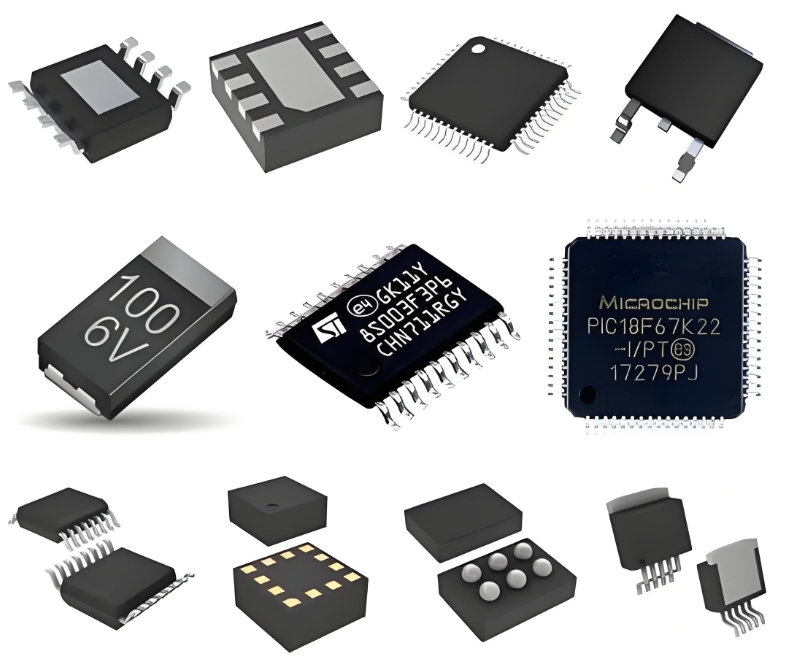
The OP470GS excels in a multitude of analog circuit configurations:
1. **Precision Instrumentation Amplifiers:** Its low offset and drift, combined with excellent channel matching, allow for the construction of highly accurate 2- or 3-op-amp instrumentation amplifiers. These are critical in data acquisition systems for measuring small differential signals in the presence of common-mode noise.
2. **Active Filters:** The combination of wide bandwidth and low noise makes the OP470GS an excellent choice for implementing active filter topologies (e.g., Sallen-Key, state-variable) in audio processing, communication systems, and anti-aliasing circuits.
3. **Multiplexed Data Acquisition Systems:** In systems where multiple sensor inputs are sequentially sampled, using a single OP470GS for signal conditioning ensures consistent amplifier characteristics across all channels, simplifying calibration and improving overall system accuracy.
4. **Voltage Followers and Buffers:** Its high input impedance and low output impedance make it perfect for isolating stages within a circuit, preventing loading effects between high-impedance sources and subsequent processing stages.
When designing with the OP470GS, proper decoupling is essential. **Place 0.1 µF ceramic decoupling capacitors as close as possible to each supply pin and the ground plane** to ensure stability and minimize noise. For applications requiring the utmost precision, careful PCB layout to mitigate thermocouple effects and parasitic leakage paths is recommended.
**ICGOODFIND**: The OP470GS stands out as a superior quad op-amp solution, masterfully balancing ultra-low noise, minimal offset voltage, and exceptional thermal stability. Its robust architecture and versatile performance make it an indispensable component for engineers designing advanced precision analog systems, from medical devices to test and measurement equipment.
**Keywords**: Precision Operational Amplifier, Low Noise, Low Offset Voltage, Quad Op-Amp, Instrumentation Amplifier

