
The world of embedded systems is built upon the foundation of capable, efficient, and versatile microcontrollers (MCUs). Among the myriad of options available, the NXP MKL16Z64VLH4 stands out as a particularly compelling choice for designers seeking a powerful yet energy-efficient solution. This comprehensive guide delves into the architecture, key features, and target applications of this member of the Kinetis KL series.
At the heart of the MKL16Z64VLH4 lies the ARM Cortex-M0+ core, the most energy-efficient processor in the ARM portfolio. This 32-bit core operates at frequencies of up to 48 MHz, delivering an optimal blend of processing power and minimal power consumption. Its streamlined architecture is designed for deterministic operation, making it ideal for a wide range of control-oriented applications. The core is supported by 64 KB of flash program memory and 8 KB of SRAM, providing ample space for complex firmware while ensuring data is processed swiftly.
A significant strength of this microcontroller is its exceptional low-power performance. The MCU incorporates a sophisticated power management infrastructure featuring multiple power modes, including Very Low Power Run (VLPR), Stop (VLPW), and Wait (VLPS). These modes allow developers to finely tune the power consumption of their application, drastically extending battery life in portable and wireless devices. This makes the KL16Z64 a prime candidate for devices that must operate for years on a single battery.
The peripheral set of the MKL16Z64VLH4 is rich and diverse, enabling it to interface with a vast array of sensors, actuators, and communication networks. Key peripherals include:
A 16-bit Analog-to-Digital Converter (ADC) for high-precision measurement of analog signals.
Multiple low-power timers (LPTPM, PIT) for precise timing, pulse generation, and motor control.
A comprehensive selection of serial communication interfaces, including UART, SPI, and I2C modules, facilitating easy connection to other chips and systems.
A 12-bit Digital-to-Analog Converter (DAC), useful for generating analog waveforms and control voltages.
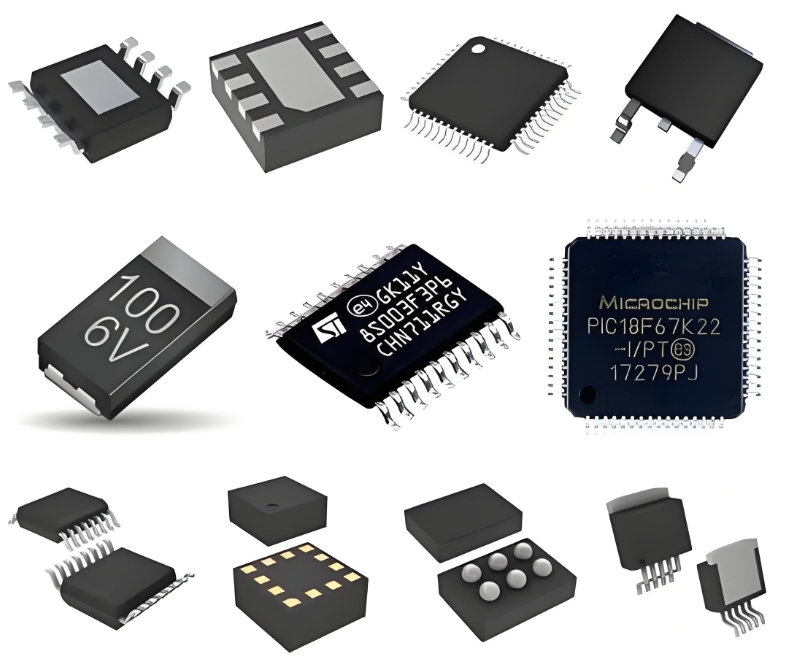
Housed in a 64-pin LQFP package, the MKL16Z64VLH4 offers a substantial number of General-Purpose Input/Output (GPIO) pins, providing the flexibility needed for complex designs. Furthermore, its robust design and wide operating voltage range (1.71 to 3.6V) ensure reliability in electrically noisy environments.
Typical applications for this MCU are found wherever efficiency, size, and cost are critical. It is perfectly suited for portable medical devices, wearable fitness trackers, intelligent sensors, home automation nodes, and a vast array of consumer electronics. Its combination of processing muscle, low energy drain, and a comprehensive feature set provides engineers with a versatile platform to bring their innovative ideas to life.
ICGOOODFIND: The NXP MKL16Z64VLH4 is a highly integrated and ultra-low-power 32-bit MCU that masterfully balances performance with energy efficiency. Its ARM Cortex-M0+ core, abundant memory, and extensive peripheral suite make it an outstanding and versatile solution for developers tackling the challenges of next-generation battery-powered and connected embedded systems.
Keywords: ARM Cortex-M0+, Ultra-Low-Power, Kinetis KL Series, 64KB Flash, Embedded Systems.

