
MCP1702T-3002E/MB 3.0V LDO Voltage Regulator: Technical Specifications and Application Circuit Design
The MCP1702T-3002E/MB is a highly efficient, low-quiescent current CMOS low-dropout (LDO) voltage regulator from Microchip Technology, designed to deliver a fixed 3.0V output voltage from an input voltage range of 2.7V to 13.2V. Its combination of very low power consumption, high accuracy, and a compact form factor makes it an ideal power management solution for a vast array of battery-powered and continuous-operation applications.
Key Technical Specifications
The standout feature of the MCP1702 is its exceptionally low quiescent current, which is typically just 2.0 µA. This minimal current draw significantly extends battery life in portable devices such as wireless sensors, IoT nodes, and handheld electronics. Despite this low power consumption, the regulator can supply a maximum output current of 250 mA, sufficient for powering microcontrollers, sensors, and other peripheral components.
The device boasts a very low dropout voltage, typically 300 mV at 250 mA load. This allows it to continue regulating the 3.0V output even as the input voltage dips very close to the output level, which is crucial for extracting the last bit of energy from a discharging battery.
Other critical specifications include:
High Output Accuracy: ±1% under most operating conditions.
Low Temperature Coefficient: Ensures stable output over a wide temperature range (-40°C to +125°C).
Standby Current: Typically 100 nA when the enable pin is shut off.
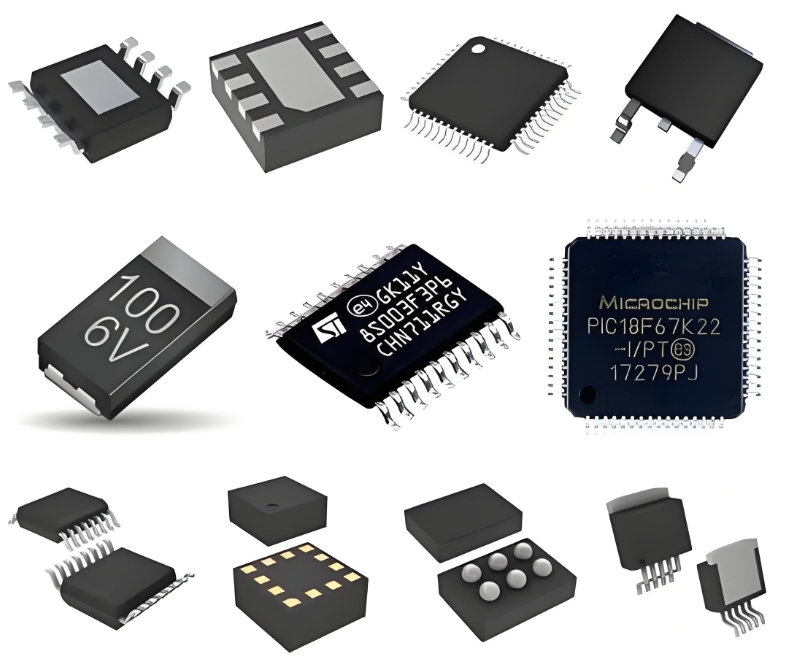
Package: Available in the space-saving SOT-23-3 surface-mount package (MB designation).
Protection Features: Built-in over-current protection (OCP) and thermal shutdown (TSD) to safeguard both the regulator and the load.
Typical Application Circuit Design
Implementing the MCP1702T-3002E/MB is straightforward, requiring only two external capacitors for stable operation. The basic application circuit is shown below.
```
VIN (2.7V - 13.2V)
│
├───┤ ├─── CIN (1µF)
│
│ ┌───────────┐
├───┤ VIN │
│ │ │
│ │ EN ├───┬───○ EN (Connect to VIN for always-on)
│ │ │ │
│ │ GND ├───┴───○ GND
│ │ │
├───┤ VOUT │
│ └───────────┘
│
├───┤ ├─── COUT (1µF)
│
VOUT (3.0V, 250mA max)
```
1. Input Capacitor (CIN): A 1 µF ceramic capacitor placed close to the VIN and GND pins is recommended to improve transient response and stability. While the regulator is stable without it, it is considered essential for good engineering practice.
2. Output Capacitor (COUT): A 1 µF ceramic capacitor on the output is required for stability. The MCP1702 is designed to be stable with low-ESR ceramic capacitors, which are ideal for modern PCB designs.
3. Enable Pin (EN): This active-high pin allows for external on/off control of the regulator, putting it into a near-zero power consumption shutdown mode. For simple always-on operation, this pin should be tied directly to the VIN pin.
Design Considerations:
Thermal Management: When operating at high input voltages and maximum load current, power dissipation (P_DISS = (VIN - VOUT) IOUT) can become significant. Ensure the PCB provides adequate copper pour to act as a heatsink for the SOT-23 package.
Noise Sensitivity: For noise-sensitive analog circuits, adding a small-value ceramic capacitor (e.g., 100 nF) in parallel with the larger output capacitor can help filter high-frequency noise.
The MCP1702T-3002E/MB stands out as an exceptional LDO regulator for power-sensitive designs. Its unparalleled combination of ultra-low quiescent current, a low dropout voltage, and robust 250 mA output capability in a miniature package makes it a superior choice for extending battery life and ensuring reliable voltage regulation in space-constrained, portable, and IoT applications.
Keywords:
1. LDO Regulator
2. Low Quiescent Current
3. 3.0V Output
4. Battery-Powered Applications
5. Thermal Shutdown

